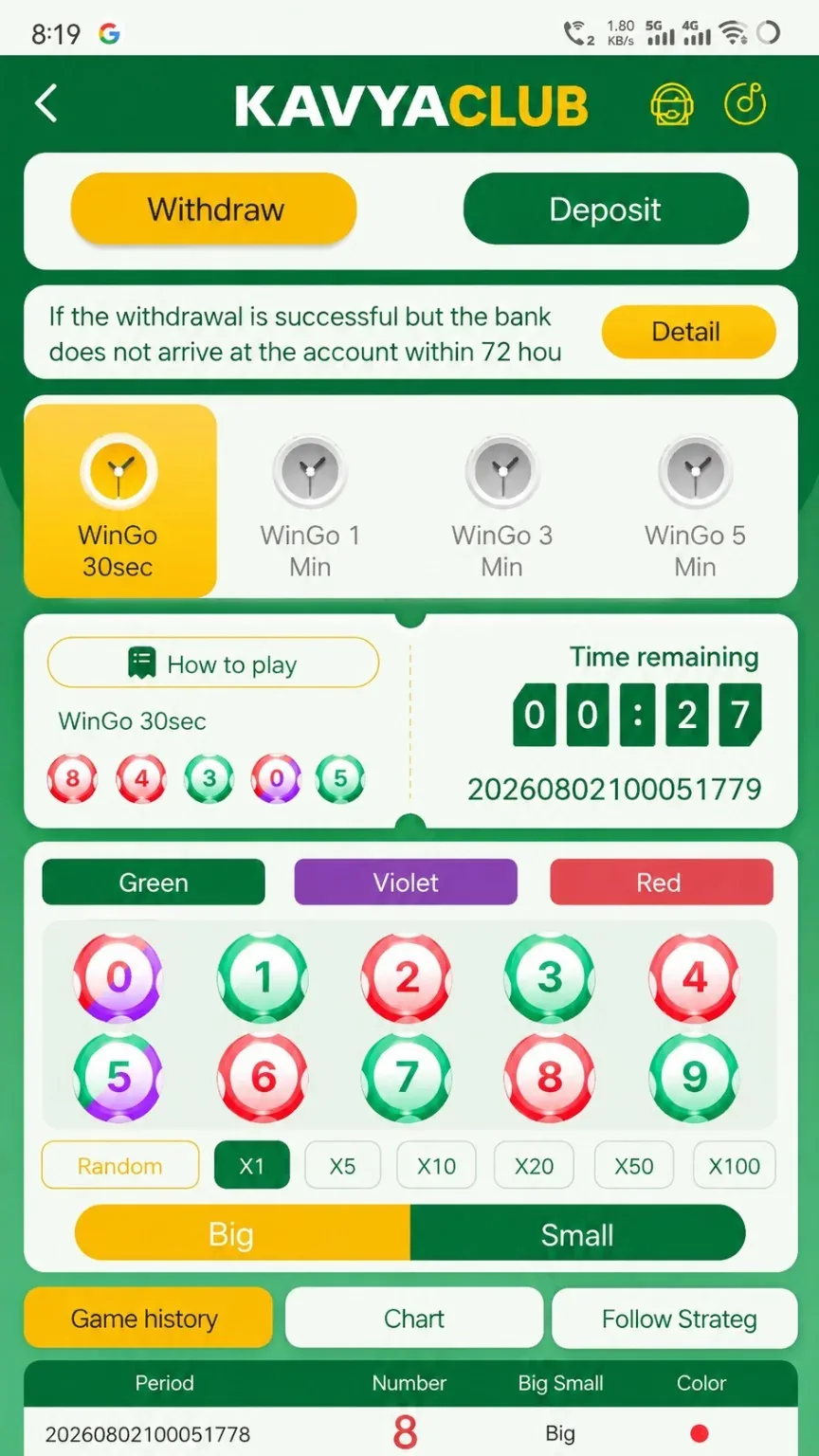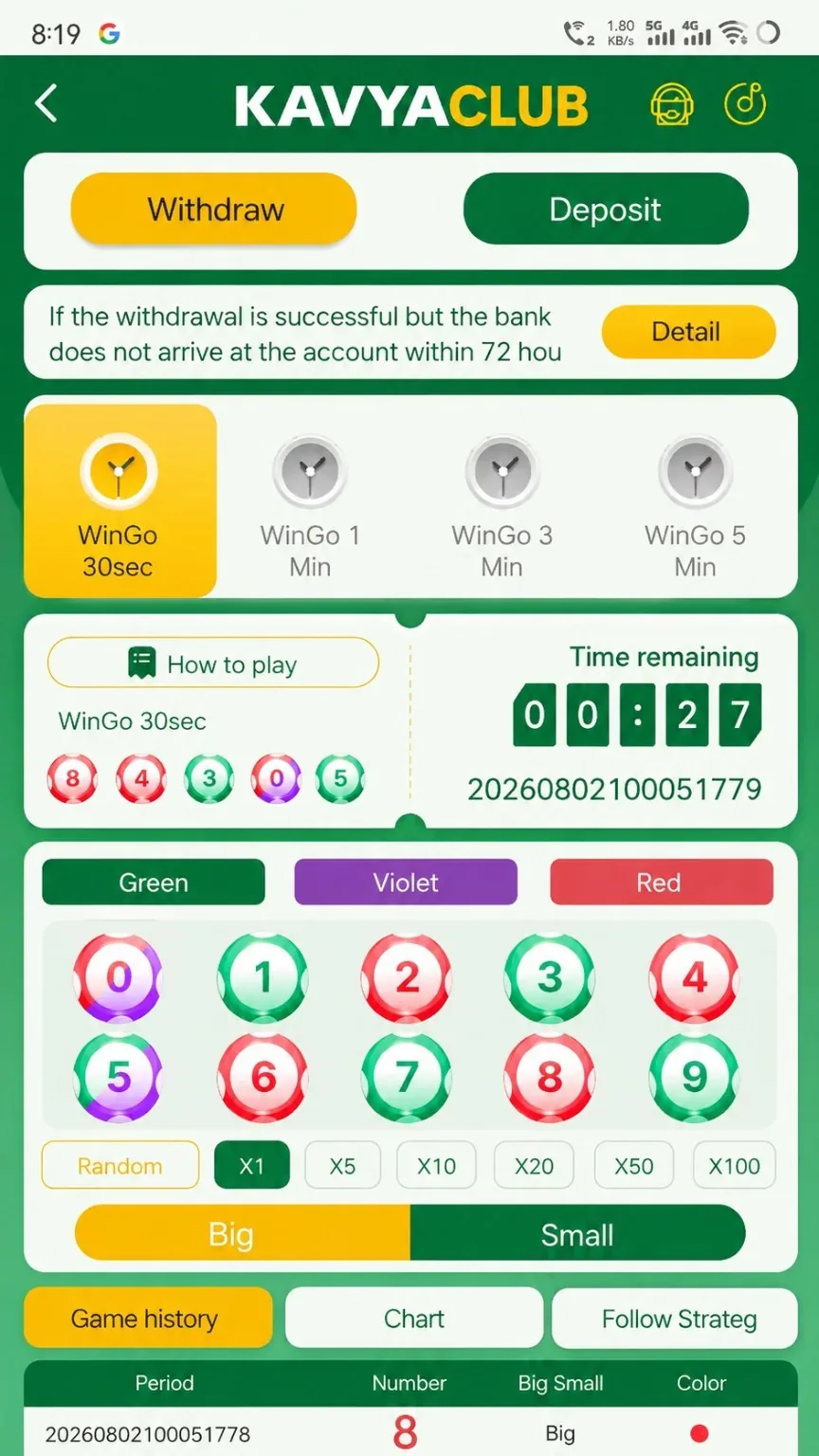
A game guide is most useful when it helps you understand what is on the screen. It should explain controls, timers, history and rules without pretending that previous results reveal what will happen next. Kavyaclub game guides are structured around that practical purpose.
Begin with the round information
Many game screens display a period number, countdown timer or round state. Read those elements first because they tell you whether a round is open, closing or already completed. In the WinGo guide, for example, the timer and period number are part of the basic interface. The Color Game guide similarly explains how color and number choices are presented alongside recent results.
History is a record, not a forecast
Result history can help you confirm what happened in a previous round or check whether the displayed outcome matches your record. It does not turn a chance-based game into a predictable sequence. A long run of one result does not create a guarantee that another result is “due.” Treat history as documentation rather than a signal.
Read the rules before the stake controls
Different games use different settlement rules. Before choosing an amount, open any available rule, paytable or information panel. For slots, the slot guide recommends checking the paytable and stake range. For casino-style games, the casino guide focuses on understanding the table or room before placing a bet.
Separate interface learning from betting decisions
A guide can explain what a button does; it cannot tell you which outcome will win. This distinction matters for fast games where the next round begins quickly. If you find yourself increasing a stake because a previous round lost, stop and reconsider the budget you intended to use. Chasing losses can turn a short session into a much larger expense.
Mini games need the same caution
Aviator, Crash, Dice, Chicken Run and Mines can look very different, but they share the same principle: outcomes involve risk and cannot be guaranteed by a pattern seen on screen. The Mini Games guide is a starting point, with separate pages available for individual games.
Use My Bets or history for record keeping
If the interface provides My Bets, transaction history or a round record, use it to review completed activity rather than relying on memory. This is especially useful when checking whether a balance change corresponds to a completed round. If something does not match, capture the round or order reference before contacting support.
Know when to stop reading and take a break
Repeatedly checking guides, histories or statistics can create the feeling that more information will reveal a certain outcome. If that happens, a break is more useful than another chart. Decide in advance how much time and money you are prepared to use, and stop when either limit is reached.
The best way to use a Kavyaclub game guide is simple: learn the interface, understand the official rules, keep accurate records and treat every chance-based result as uncertain.